
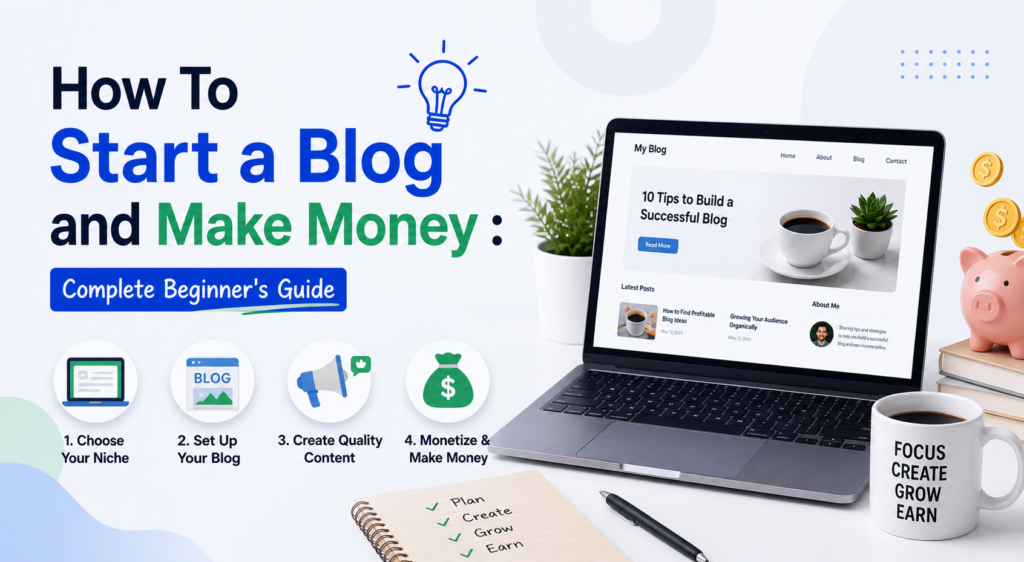
Starting a blog is still one of the best decisions you can make if you want to build an audience, share expertise you care about, and create an income stream that doesn’t depend on a single employer or client. I started my first blog over a decade ago. It was imperfect, slow to gain traction, and took longer to monetize than I expected. It also changed my career and income trajectory in ways that no job ever did.
This guide gives you the exact approach I would take if I were starting from scratch today — with the benefit of 14 years of hindsight, a lot of failed experiments, and a clear picture of what actually matters versus what just sounds good in a “start a blog” article.
For the technical side of getting your blog live, the dedicated setup guide covers every step in detail. How To Create Your Own Website — the hands-on technical companion to this guide
Step 1: Choose a Niche That Has Both Passion and Profit Potential
Your niche is the topic your blog focuses on. The mistake most new bloggers make is either choosing something so broad (“lifestyle”) that they have no authority, or something so narrow that there’s insufficient search demand to ever build meaningful traffic.
The sweet spot is a topic you know well enough to write about consistently for two to three years, that has real search demand, and where advertisers or affiliate programs pay reasonably well. High-performing niches include personal finance, health and wellness, technology, digital marketing, home improvement, and travel — but any niche can work if there’s genuine demand and you approach it with depth and specificity.
Before committing to a niche, spend one hour with a keyword tool. Search your main topic. Look at the monthly search volumes for 10–15 keyword ideas. If you’re consistently seeing 1,000+ searches per month across relevant terms, there’s an audience worth building for.
Pro Tip: Use a free keyword research tool before choosing your niche — demand data beats gut feeling every time. Best SEO Tools — see my recommended free and paid options for keyword research
Step 2: Choose the Right Blogging Platform
For most serious bloggers, self-hosted WordPress (WordPress.org) is the right long-term choice. It gives you full ownership of your content, maximum flexibility, and the best long-term monetization options. You can run ads, sell products, use any plugin you want, and migrate to different hosting without losing your content.
That said, the complexity of self-hosted WordPress isn’t for everyone at the start. If you want a simpler, lower-maintenance entry point, all-in-one platforms like Wix or uKit offer solid blogging capabilities without the overhead of managing a CMS installation.
Unsure which platform is right for your blog? The Best Website Builders comparison covers all the major options and who each one is best suited for.
Step 3: Set Up Hosting and Install Your Blog
If you go the self-hosted WordPress route, you’ll need to choose a hosting provider. For new bloggers on a budget, Bluehost or Hostinger are solid starting points. If you want the best performance from day one and have a modest budget, SiteGround delivers meaningfully better speed and support.
Related Reading: Best Web Hosting — my honest comparison of the top hosting providers for new blogs
Once your hosting is live, install WordPress using the one-click installer (available on all major hosts), choose a fast, lightweight theme (GeneratePress and Astra are excellent free options), and install these essential plugins: Yoast SEO or RankMath, WP Rocket or Litespeed Cache, and Wordfence Security.
Step 4: Plan Your Content Before You Write
One of the biggest mistakes new bloggers make is starting to write without a content strategy. Random publishing without a keyword and audience framework produces content that might be good but will rarely rank, because it’s not aligned with what people are actually searching for.
Before writing your first post, map out 20–30 target keywords for your niche. Organize them into a content hierarchy: 3–5 broad “pillar” topics supported by 5–10 specific “cluster” articles each. This structure tells Google what your site is about and helps you build topical authority faster than if you were writing about whatever came to mind.
- Pillar post example: “How To Start a Blog and Make Money” (this article)
- Cluster article example: “How to Choose a Blog Niche “
- Cluster article example: “Best WordPress Themes for Bloggers”
- Cluster article example: “How to Write SEO-Optimized Blog Posts”
Step 5: Publish Consistently and Prioritize Quality Over Quantity
In the early days of blogging, the advice was “publish as often as possible.” That hasn’t been good advice for several years. Google now strongly rewards depth, accuracy, and genuine expertise over quantity. One comprehensive 2,000-word guide that fully answers a reader’s question is worth more than five shallow 400-word posts.
A sustainable publishing rhythm for a solo blogger is 2–4 posts per month, each one thoroughly researched, properly structured with H2/H3 headings, and optimized for a specific keyword. Internal link between related articles as you go — this distributes authority across your site and helps readers discover more of your content naturally.
Step 6: Build Your Email List from Day One
Your email list is the only audience asset you truly own. Social media platforms change their algorithms. Google rankings fluctuate. Your email list is yours regardless of what happens on any platform. Yet most new bloggers wait until they have “enough” traffic before setting up email capture — and miss out on hundreds of early subscribers in the process.
Set up your email platform on day one, create a simple lead magnet (a checklist, template, mini-guide, or resource list relevant to your niche), and add an opt-in form to your site before your first post goes live.
You might also like: Best Online Marketing Tools — covers the best email marketing platforms for bloggers at every stage
Step 7: Monetize Your Blog
There are five primary blog monetization models, and most successful blogs eventually use a combination of all five:
- Display advertising: Easiest to implement. Start with Google AdSense; move to Mediavine (50K sessions/mo threshold) or AdThrive (100K) for significantly higher RPMs.
- Affiliate marketing: Earn commissions by recommending products and services your audience would benefit from. The highest-income model for most content bloggers. Requires traffic and reader trust.
- Digital products: Ebooks, templates, spreadsheets, presets, and online courses. High margins, fully scalable, and they sell while you sleep.
- Sponsored content: Brands pay you to write posts featuring their products. Requires audience engagement and a clear niche identity.
- Services: Offer consulting, freelancing, coaching, or done-for-you services related to your blog topic. The fastest path to significant income for new bloggers.
Realistic Income Timeline
Month 1–3: Setup, first 10–20 posts published. Revenue: essentially zero. This is an investment phase — treat it that way.
Month 3–6: First affiliate commissions ($50–$300/mo), small AdSense earnings. Progress is real but modest.
Month 6–12: With consistent publishing and solid SEO, $500–$2,500/mo is achievable in most niches. This is where the effort starts to compound.
Year 2+: Bloggers who stick with it and scale their content strategy often reach $3,000–$10,000/mo and beyond. The ceiling is genuinely high for anyone willing to treat this like a real business.
These are realistic ranges, not guarantees. Niche, execution quality, and consistency are the determining factors.